Published: 3 August 2026
Colours from Root and Bark
Before aniline dyes, the entire palette of the Macedonian kilim came from plants growing within a day's walk of the village.
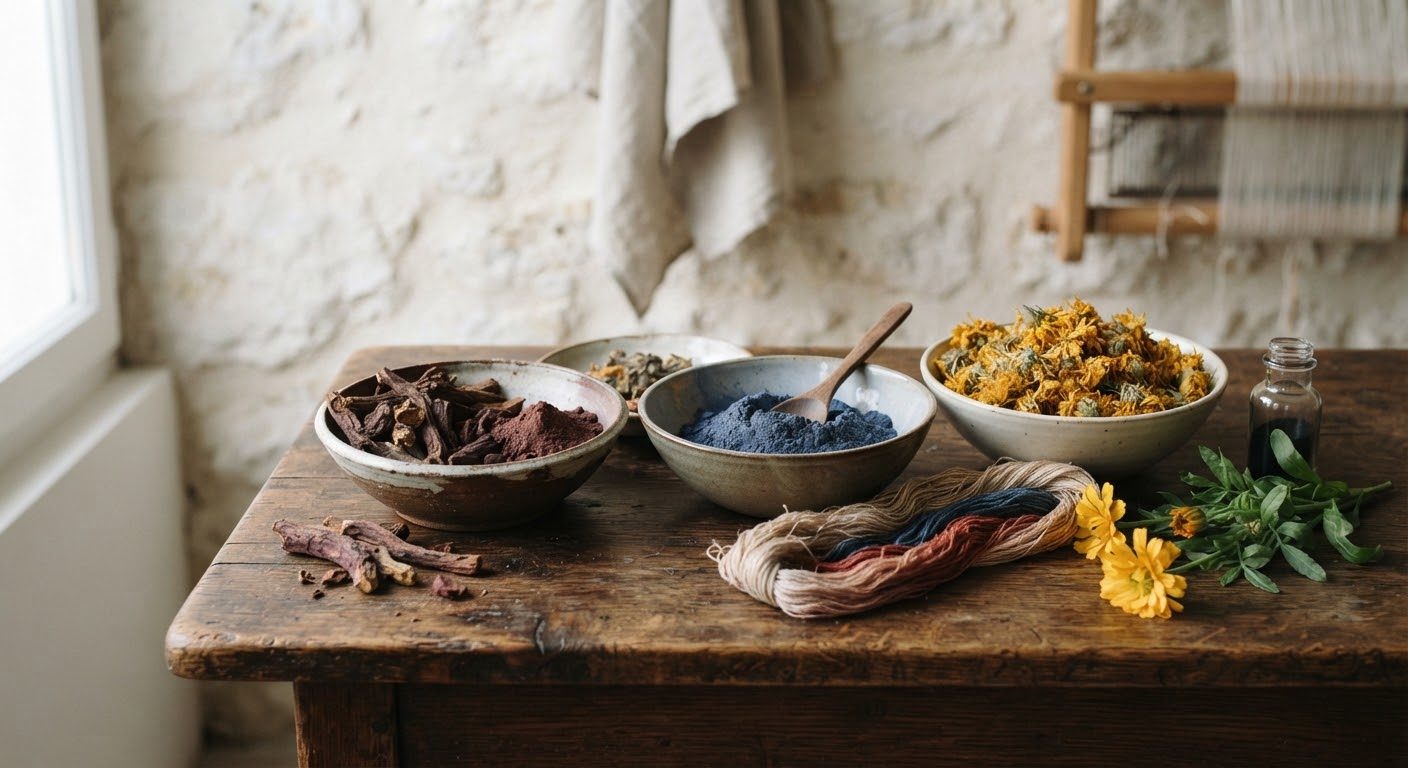
Red comes from madder, a plant whose root is lifted only in its third year. Yellow — from weld or onion skins. Brown and black — from walnut husk, gathered in autumn.
Why it matters
Plant dyes are not merely "more authentic". They age differently. A synthetic dye fades evenly and the piece looks worn out; a plant dye shifts unevenly and gains depth over the years.
Elena Petreska keeps a notebook of recipes gathered across thirty years: how much bark, how much water, how many hours at a simmer, in which vessel. Some of those recipes exist nowhere else.
The process
- The wool is washed and mordanted with alum so the colour will bind.
- Dyeing takes two to eight hours, depending on the shade.
- Drying happens in shade — sunlight opens the colour too soon.
A single dye bath yields enough wool for roughly one metre of kilim.
All stories